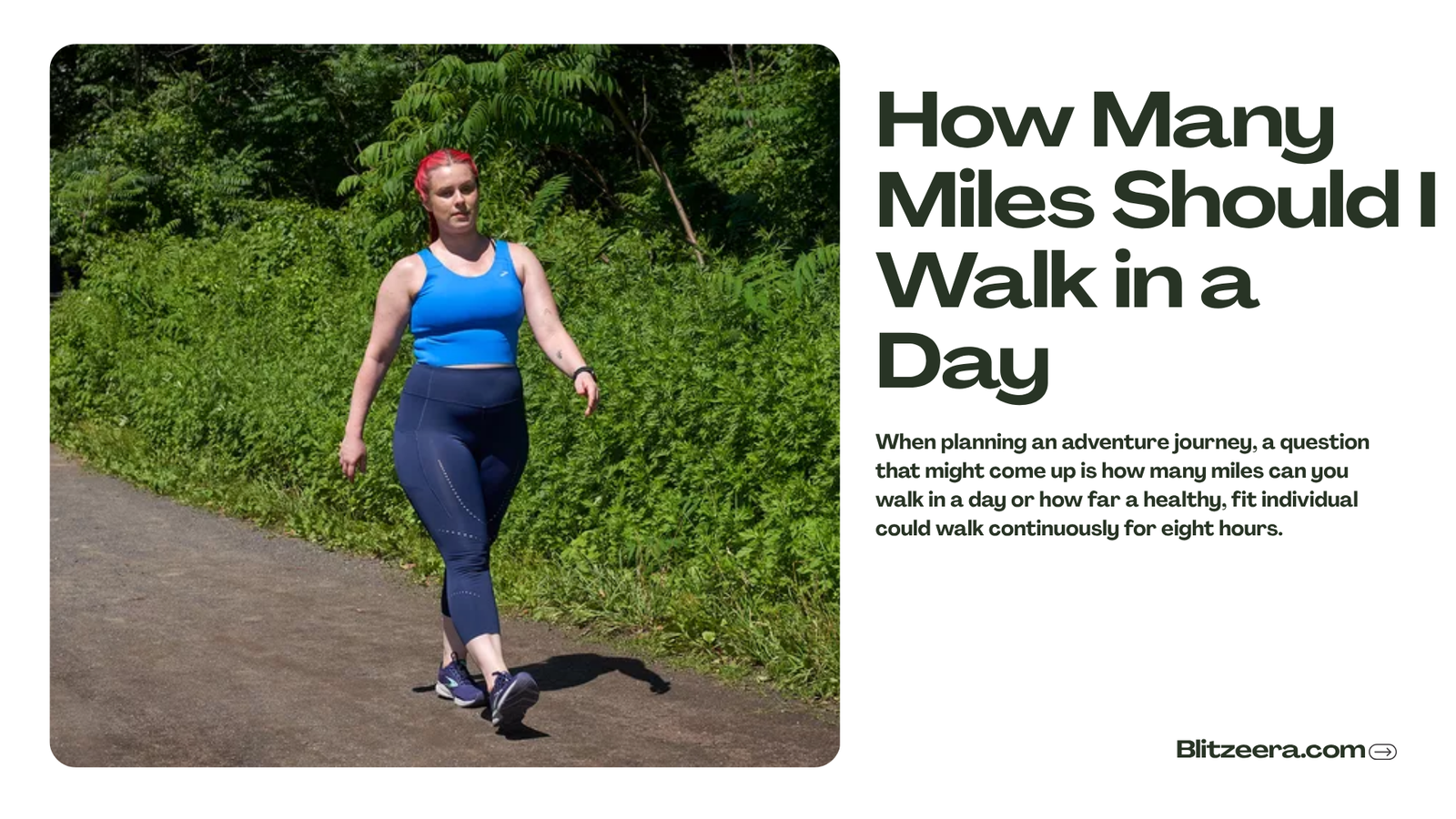
How Many Miles Should I Walk in a Day: When planning an adventure journey, a question that might come up is how many miles can you walk in a day or how far a healthy, fit individual could walk continuously for eight hours. Another case that may need it is suddenly walking due to transit disruptions caused by a natural catastrophe or a personal emergency.
A trained walker may complete a marathon (26.2 miles) in eight hours or less, or 20 to 30 miles a day. But the average individual walks only 2 to 2.5 miles a day.
How Many Miles Should I Walk in a Day
Estimate Your Walking Distance
Beginning Walkers
Those who have not done much serious walking often finish these treks without difficulty, but many find they require better walking shoes.
Trained Walkers
If a walker were moving quickly and without taking stops, they could go 30 miles in a day. They would have to build up mileage slowly over a period of three to six months before attempting a long-distance walk.
Advanced Walkers
However, you will see advice on Camino walking sites that it is okay to start the trip untrained, with the premise that “the Camino will train you”. This is terrible advice; an unskilled trekker will be unpleasant and may have to stop due to injury.
Train to Build Mileage
That first time you made it to twelve miles, it may have seemed really tough. But in six weeks, when you’re walking 18-mile days, the first 12 miles will feel simple.
Tips for Long Walks
Manage Blisters and Chafing
As you walk, your shoes and socks rub against your toes, heels, and the ball of your foot, causing blisters to form. You could also see chafing under the breasts, in the groyne, and under the armpits when perspiration generates gritty salt crystals. You may harden the skin on your feet by gradually increasing your walking time and distance. A lubricant can protect the skin.
Treating blisters and chafing: Tips
- Choose your most comfy sneakers that fit perfectly.
- In challenging conditions, wear your best trail shoes or comfy boots.
- Don’t experiment on your first long stroll.
- Use cornflour in your socks to keep your feet dry.
- A little petroleum jelly on your toes and heels will help prevent blisters, too.
- Choose synthetic or wool socks instead of cotton socks, as they wick perspiration away and help prevent blisters.
Layer Your Clothing
Three layers get you through most circumstances on the mountain or in the bush. It’s nice to be able to add or take away a layer as you warm up or cool down.Considerations for layering:
- Choose a polyester inner layer that wicks away perspiration, not cotton.
- Select an insulating layer, such as a wool shirt, a polyester fleece vest, or a down vest, if conditions are chilly.
- Bring a windproof outer layer.
Other musts include a hat, a decent backpack or waist pack, a water bottle, sunscreen, and lip protection.
Carry Your Stuff
If you carry a handbag or briefcase for more than a few minutes, your posture will change. For any long-distance walking, choose a backpack that keeps your items safe while maintaining an appropriate walking posture. A backpack with a waist belt places the burden at your centre of gravity, where nature intended it to be.
Plan for Food and Hydration
Drink a large glass of water 90 minutes before you walk. This will provide your body with adequate initial hydration and time to eliminate the excess. Every half hour, walk and drink a cup of water. Finish your stroll and then drink another big glass of water.
Have a modest, balanced lunch of protein and carbohydrates before your stroll. If you are lactose intolerant, avoid dairy items before a stroll. You would rather not run on an empty stomach, but you don’t want a lot of food sloshing about in there as you run, either. If you’re going on a really long walk, have a little food after 45–60 minutes.
Make Safety a Priority
Be careful, especially if you are wandering in the dark. Wear reflective, light-coloured clothing and be careful; motorists are less likely to detect you. Bring a tiny flashlight or, even better, a headlamp so you can see where you are travelling.